
DIVE BLOG
Why the Kohala Coast Is One of the Best Diving Gateways on the Big Island
Key Takeaways
- The Kohala Coast sees a fraction of the dive boat traffic of Kona, meaning sites are uncrowded and the underwater experience is more immersive.
- West Hawaii's reefs, including the Kohala stretch, have been actively monitored by scientists and are among the most intact and pristine in the state.
- Ancient lava flows have created a dramatic underwater landscape of tubes, caverns, and drop-offs that make every dive feel like genuine exploration.
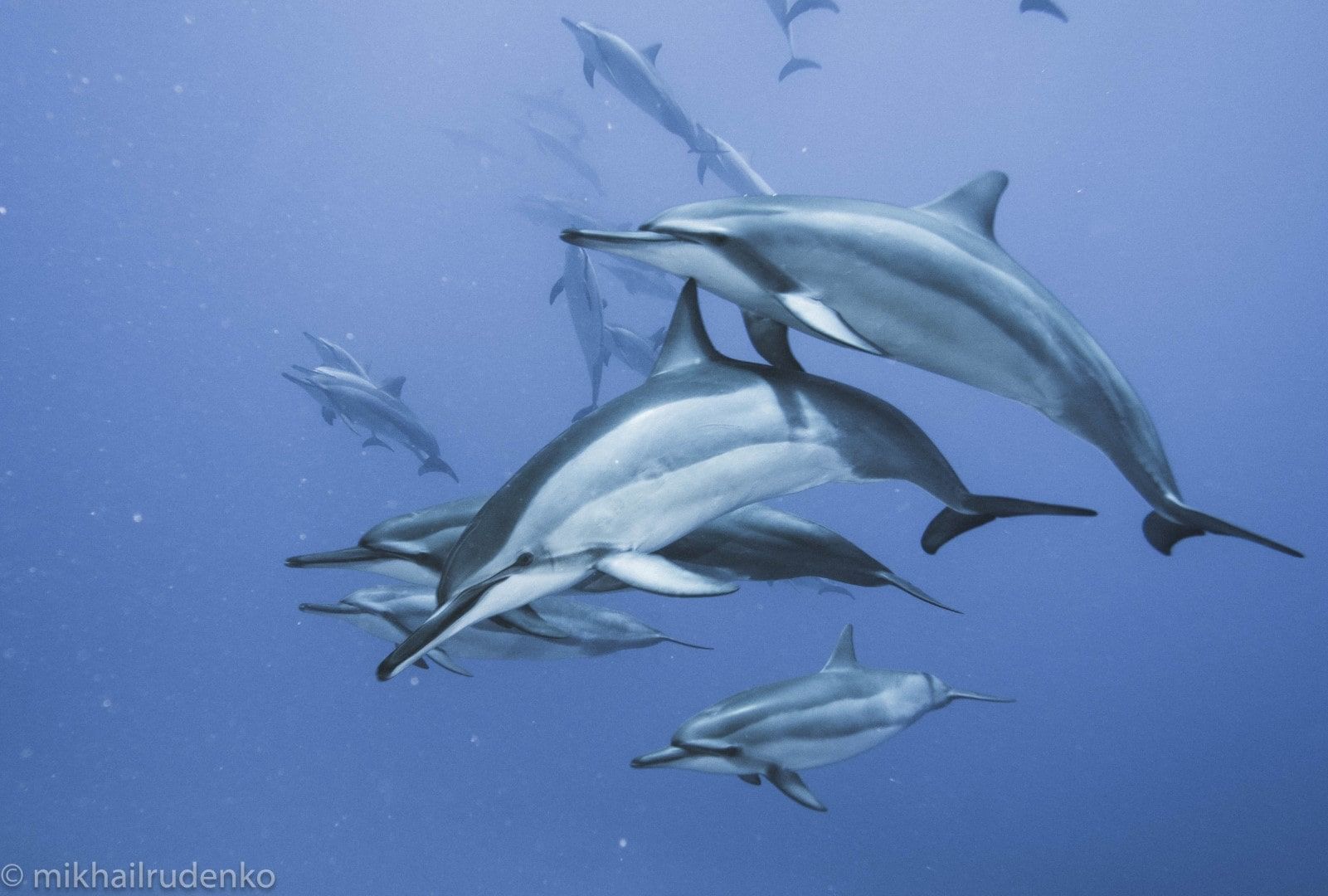
- Hawaiian spinner dolphins maintain resident pods along this coastline year-round, and green sea turtle cleaning stations are a regular feature at multiple sites.
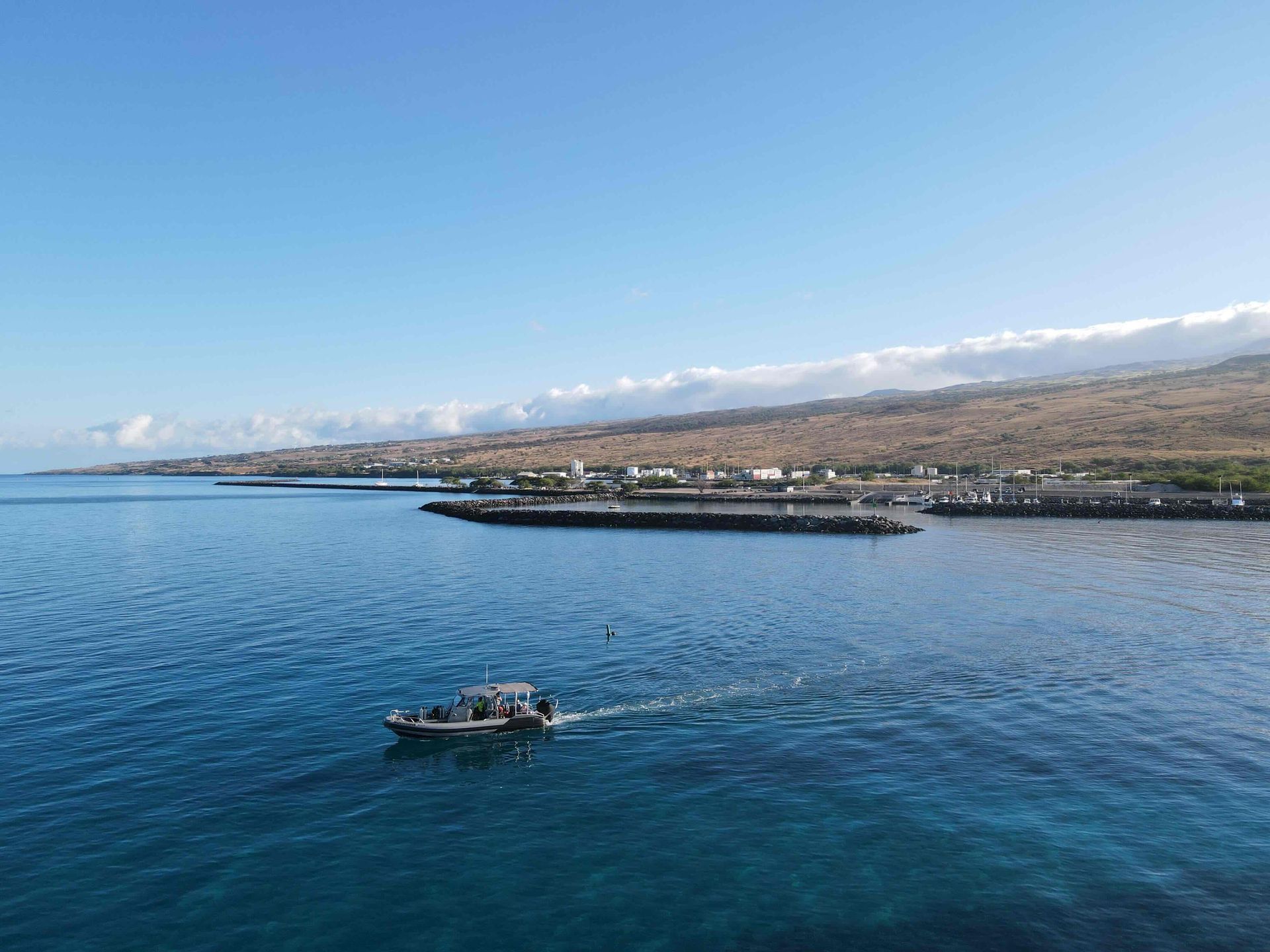
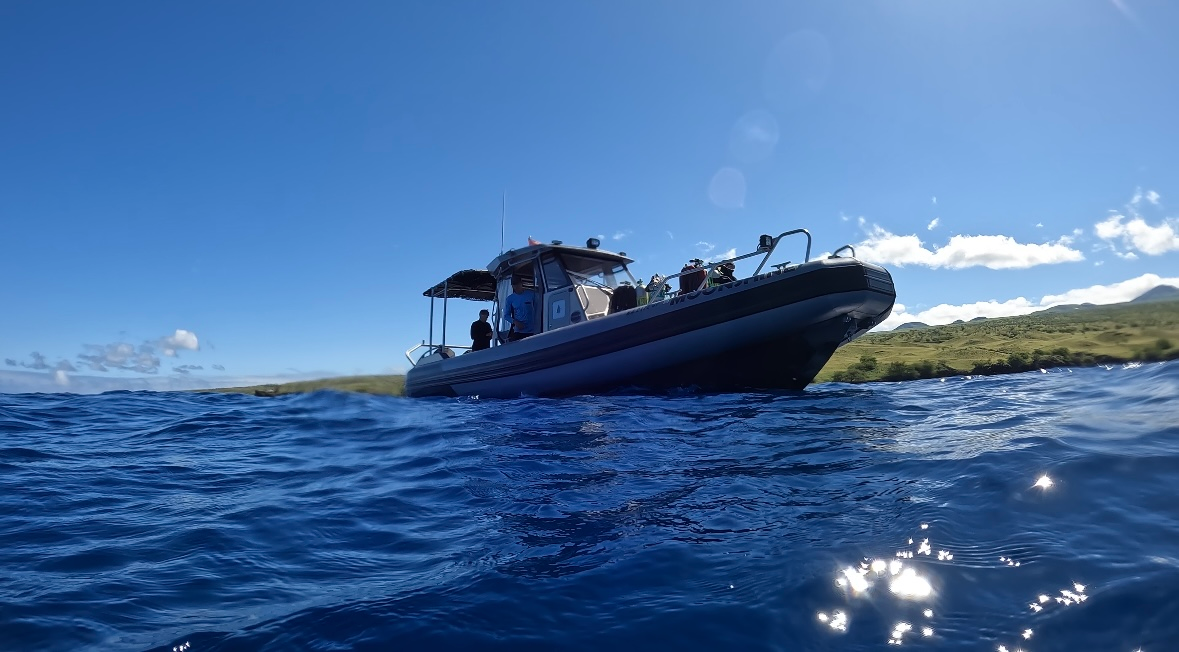
- Only a small number of permitted operators launch from Kawaihae Harbor, keeping the diver-to-reef ratio low in a way that benefits everyone in the water.
Most people who come to the Big Island to dive default to Kona. It makes sense. Kona is familiar. It shows up first in search results, it's where the boat traffic is concentrated, and it's where most of the dive shops are clustered. If you follow the crowd, Kona is where you end up.
But the Kohala Coast, just north of the noise, tells a different story underwater. The reefs here are healthier. The sites are quieter. The topography is genuinely dramatic in a way that stays with you. And the marine life — from cleaning station sea turtles to pods of Hawaiian spinner dolphins — shows up consistently for divers who make the trip.
The Kohala Coast is not a secret among serious divers. But it is underutilized, and that is exactly what makes it worth talking about.
The Crowd Problem Nobody Talks About
Scuba diving is, by its nature, a quiet sport. You descend, the surface noise disappears, and for the duration of a tank you are somewhere else entirely. That experience is real regardless of where you dive.
But popular dive corridors have a way of eroding it. Multiple boats anchoring at the same site. Groups of twelve or fifteen divers moving through the same swim-through. The sense that you are not quite exploring so much as touring. If you have dove crowded sites before, you know what this feels like: technically fine, but missing something.
The Kohala Coast is the antidote to that. Because it sits north of the primary Kona dive zone and because only a small number of permitted operators launch from Kawaihae Harbor, the sites here stay uncrowded in a way that genuinely changes the experience. There are no underwater traffic jams. There is no jostling for position at a cleaning station. Entire sites belong to your group and no one else.
That kind of solitude is increasingly rare in popular dive destinations anywhere in the world. On the Kohala Coast, it is simply how the diving works.
What the Research Says About These Reefs
The claim that the Kohala Coast has some of the highest coral cover in Hawaii is not just marketing language. It has scientific weight behind it.
West Hawaii's reefs have been monitored continuously by the Hawaii Division of Aquatic Resources, NOAA, and the University of Hawaii for decades. The DAR marine monitoring program surveys abundance of resource and herbivorous fish, benthic habitat cover, coral health, and biological diversity along the west coast of Hawaii Island. That kind of sustained scientific attention tells us something important: these reefs are considered worth watching, and the data collected is used directly to inform conservation decisions.
The relative resilience of coral reef sites along West Hawaii was assessed at multiple depths in 2015, 2016, and 2017, through a collaborative effort involving SymbioSeas, the Hawaii Division of Aquatic Resources, The Nature Conservancy, and NOAA's Coral Reef Ecosystem Program. The purpose of that work was to identify which reefs had the best chance of resisting bleaching and recovering from thermal stress events. The sites that scored highest in resilience share characteristics with what divers experience on the Kohala Coast: limited coastal development nearby, reduced runoff, and lower human impact compared to more trafficked stretches of coastline.
None of this means these reefs are invulnerable. Hawaii's reefs, like reefs everywhere, face real pressure from warming oceans. Long-term monitoring has documented significant changes in coral cover across West Hawaii over recent decades, driven primarily by human impacts including overfishing and land-based pollution. That context matters. It means that where reefs remain healthy, it is not by accident. It is because the conditions that allow them to thrive — reduced development pressure, cleaner water, lower foot traffic — are still intact. The Kohala stretch of coastline has those conditions working in its favor.
For divers who care about what they are looking at, this is the kind of place that gives you something to hold onto. Not just a pretty reef, but a resilient one.
Lava Made This Place
Diving anywhere in Hawaii means diving on a volcanic foundation. But the Kohala Coast takes that geography to a different level.
The Big Island is the youngest landmass in the Hawaiian chain, and the underwater topography along this stretch reflects that directly. Ancient lava flows did not just fill in a flat seafloor. They created a layered, complex landscape of features that you spend a dive actively exploring. Lava tubes wide enough to swim through. Caverns where the light drops off and the resident nocturnal species come into view. Overhangs and dramatic drop-offs that shift the visual scale completely.
This is the kind of terrain where a single site rewards multiple dives. The structure is too complex to absorb in one pass. On the first dive you map the general layout. On the second you start noticing what lives in specific crevices. By the third you are slowing down to watch the small, strange animals that never move from their spots inside a particular overhang. That layered discovery is what the Kohala topography makes possible.
It also means the diving here suits a specific kind of diver well: someone who is genuinely curious about the underwater world rather than just moving through it. Photographers and naturalists tend to love this coast for exactly this reason. There is always another crack to peek into.
What You Actually See Down There
The healthy reef structure and complex volcanic topography combine to create conditions where marine life concentrates in predictable, rewarding ways.
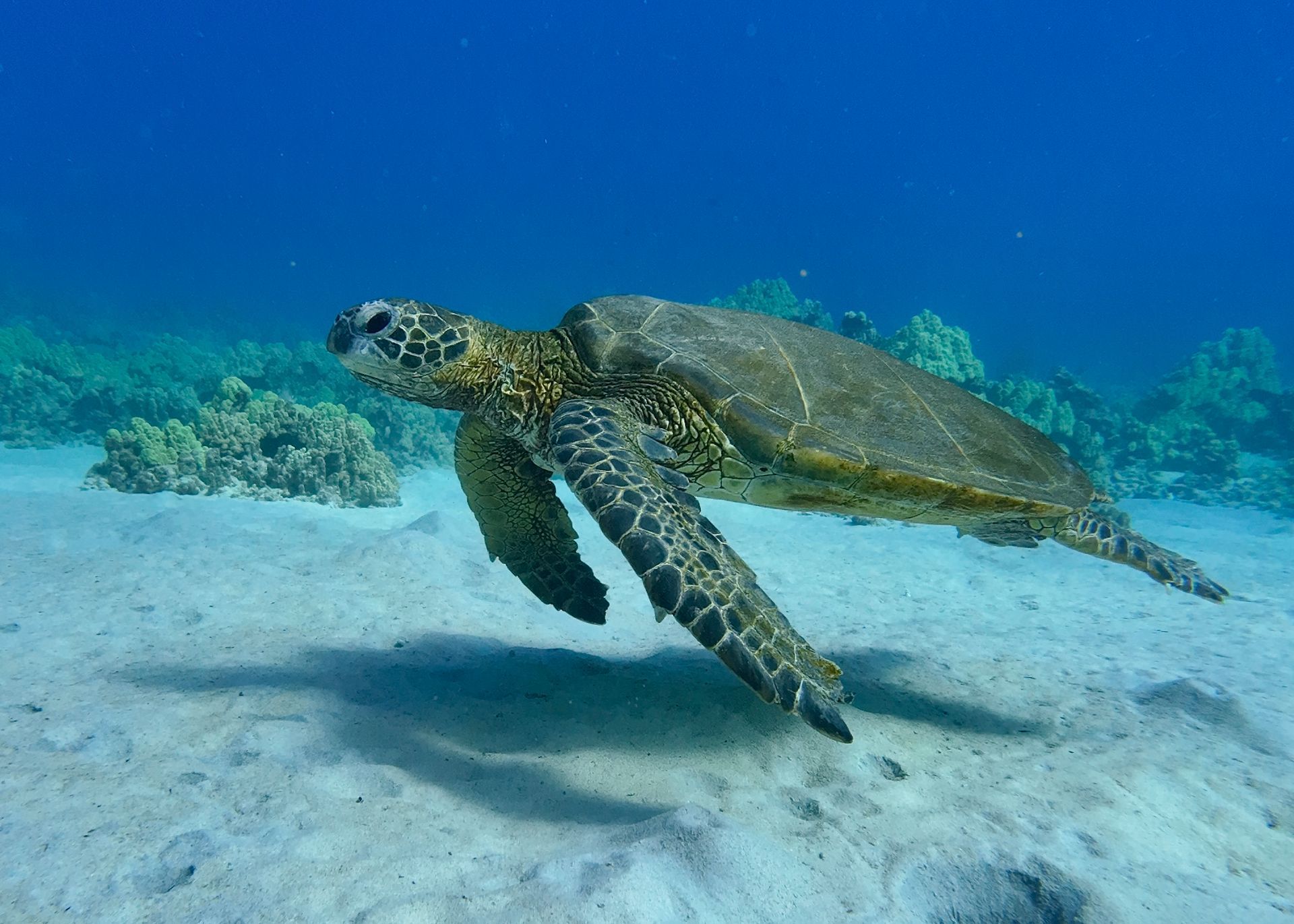
Green sea turtles are a regular presence at cleaning stations along the South Kohala coast, where small reef fish remove algae from the turtles' shells. These are not fleeting glimpses. Turtles at cleaning stations stay put, and a patient diver can half a dive observing the interaction up close. It is one of those underwater moments that rewards stillness over speed.
Hawaiian spinner dolphins are found in resident pods around all of the main islands, resting in shallow bays during the day and hunting at night for small schooling fish. The Kohala and Kona coastlines are among their consistent resting grounds, and encounters with these pods during surface intervals or while on the boat are a regular part of diving this stretch of coast. Five island resident populations of Hawaiian spinner dolphins are recognized, making these coastal pod sightings not random ocean encounters but interactions with animals that live here.
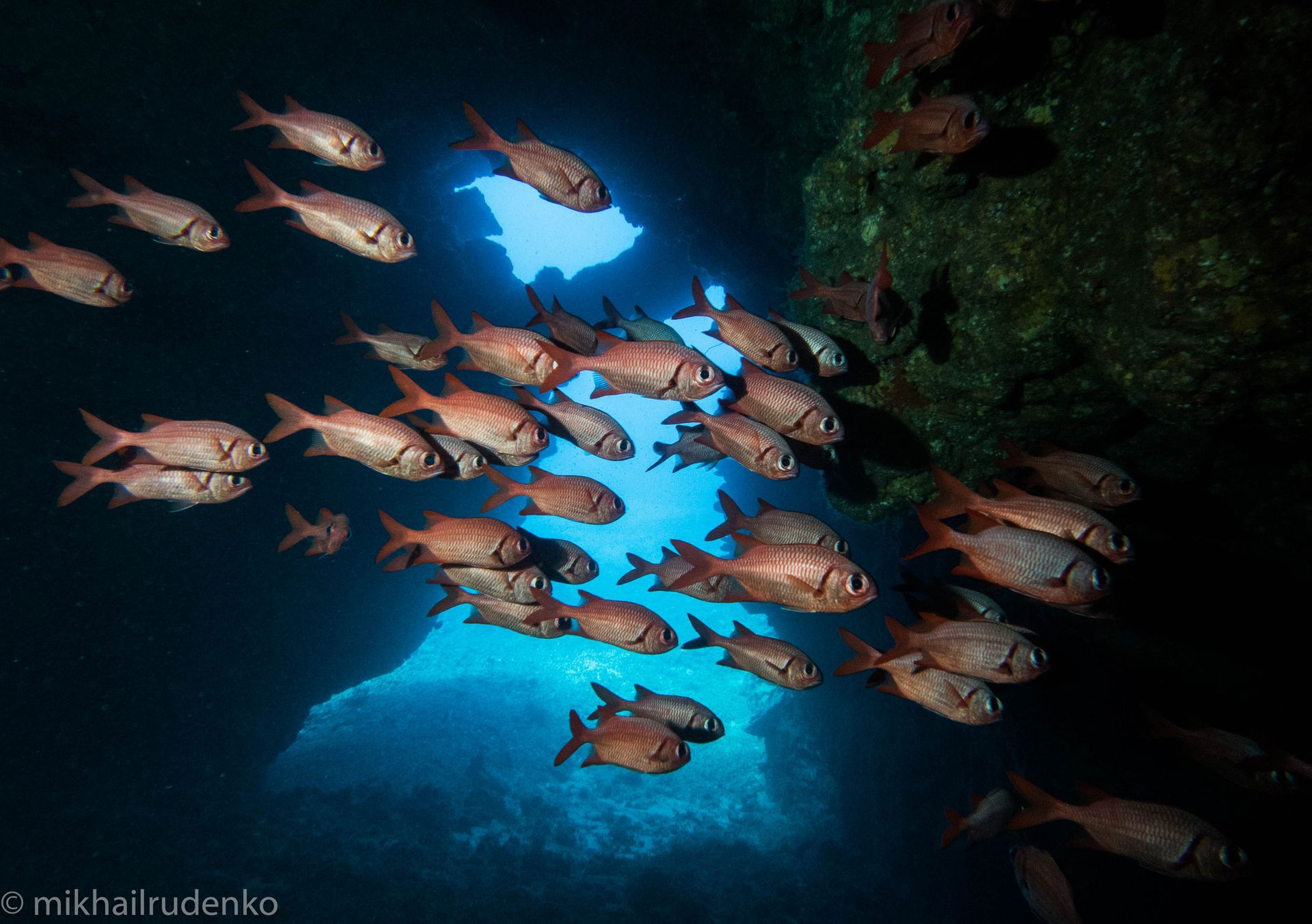
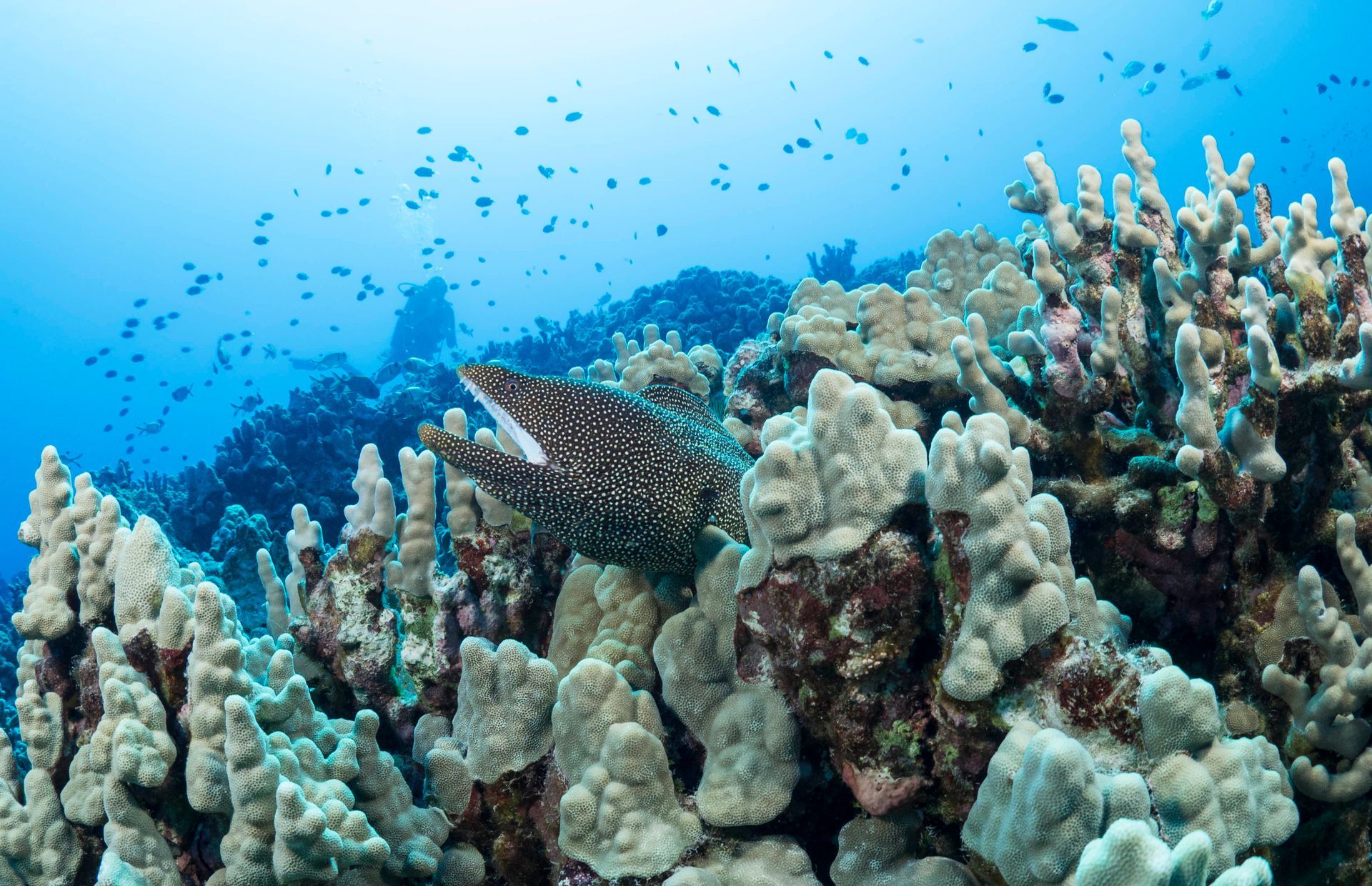
Inside the lava tubes, the story shifts entirely. The nocturnal species that shelter in the dark during daylight hours — crustaceans, soldierfish, mollusks — make the dark sections of a tube feel like a completely different ecosystem from the sunlit reef just outside. Moving between those two worlds in a single dive is one of the genuinely distinctive experiences of diving the Kohala Coast.
Nudibranchs show up throughout the reef in a variety of species, and reef fish populations here are dense in a way that signals a healthy, intact ecosystem. When you see a lot of fish, and a lot of different species, it means the food web is functioning. That is worth paying attention to.
Why Small Group Diving Changes Everything
The way a dive operation is structured matters more than most divers realize before they experience the difference.
High-volume operations move a lot of people through the water efficiently. That works for some people, and there is nothing wrong with it. But when you put twelve or twenty divers in the water at a site simultaneously, the experience changes in ways that are hard to quantify but easy to feel. The reef feels busier. Marine life scatters. The dive guide's attention is divided. You spend time managing your position relative to other divers rather than looking at what is in front of you.
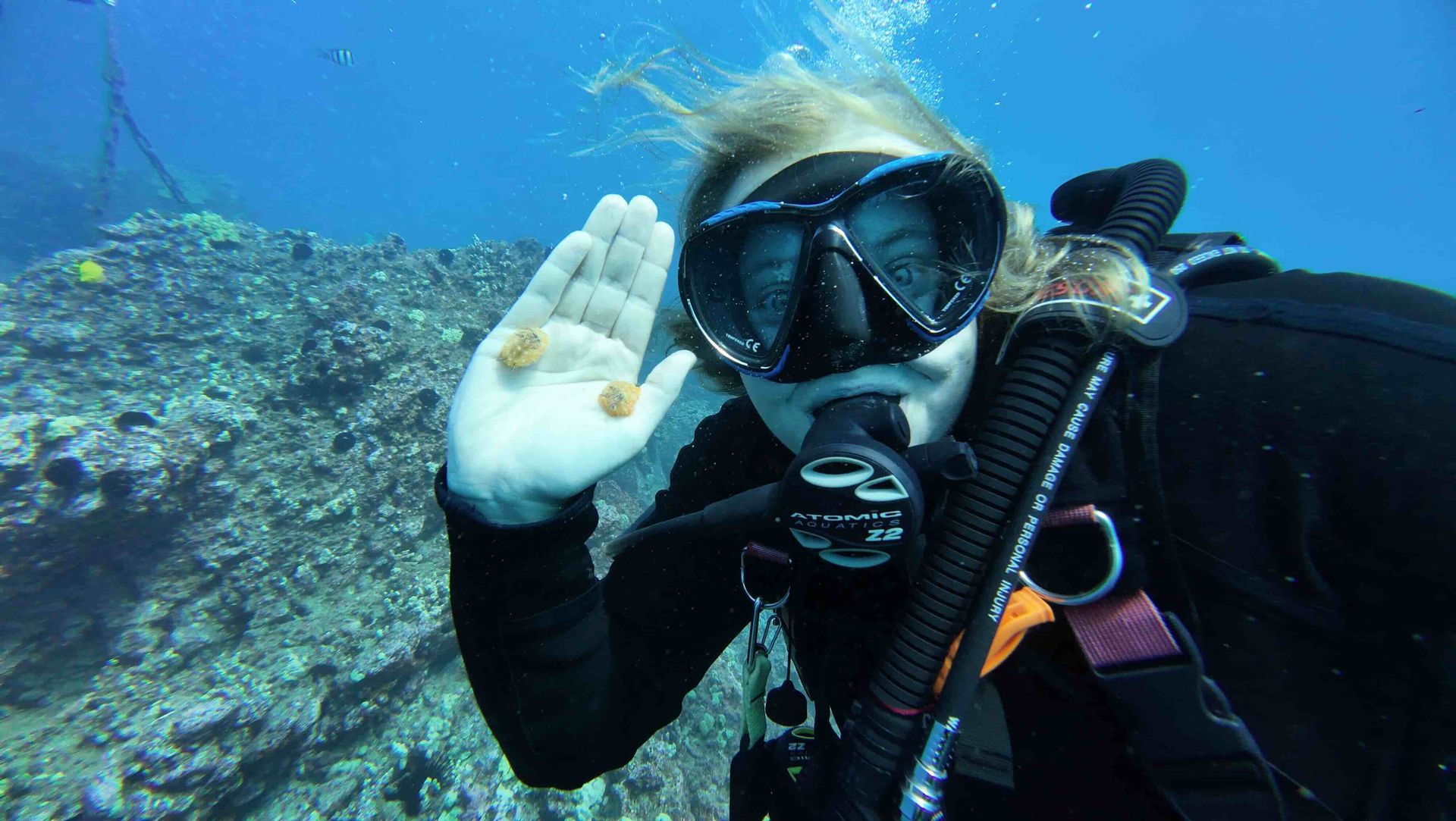
Small group diving, with a maximum of six divers, removes most of those variables. The guide can actually take you somewhere specific because they know your experience level and what you are looking to see. The site can be chosen based on conditions that day, not based on what works logistically for a large group. You move at a pace that suits the divers in the water rather than the pace that keeps a large group together.
Liquid Cosmos Divers, led by a marine biologist, takes a maximum of six divers and approaches each trip as an opportunity rooted in ocean discovery, education, and deep respect for the ocean. That structure is not incidental. It is what allows the conservation-focused, site-specific approach that makes diving the Kohala Coast feel genuinely different from a packaged tour.
This region is especially well-suited for photographers who need time and stability, naturalists who want to understand what they are seeing, and divers who have experienced crowded sites before and are actively looking for something different. It is diving as exploration rather than diving as activity.
Frequently Asked Questions
The Ocean Rewards the Divers Who Seek It Out
The Kohala Coast is not for every diver, and that is part of what makes it worth protecting. It is for the diver who wants more than a checked box. The photographer who needs time to set up a shot. The naturalist who wants to understand the ecosystem, not just pass through it. The diver who has been to crowded sites before and is looking for something different.
This stretch of coastline, the remote reefs between Waikoloa and North Kohala, represents what Hawaii's underwater world looks like when it is given space to be itself. Dense coral. Intact fish populations. Geological features that have never been touched by anything other than the ocean that shaped them.
We go out there because it is extraordinary. We keep our groups small because the reef deserves that respect. And we do this work because we believe the divers who take the time to find this coast are the ones who leave it better than they found it.
If you are ready to experience the Kohala Coast,
book a dive with Liquid Cosmos Divers
and we will take it from there.
About the Author
Jess Glazner, Ph.D. Candidate & PADI Scuba Instructor
Jess is a Ph.D. candidate in Marine Biology at the Hawaiʻi Institute of Marine Biology where she has spent the last 4 years researching how nutrient enrichment alters coral reef resilience. She has presented her work at the Hawaiʻi Conservation Conference and International Reef Futures Conference. As an AAUS scientific diver she has logged over 200 research dives across the Pacific. Jess also has been a PADI Scuba Instructor for 10 years and has 8,000 dives guiding and teaching divers in Hawaiʻi.